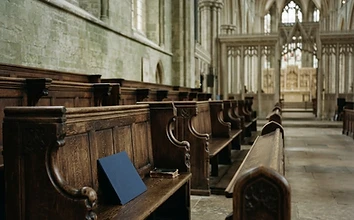
This article discusses the Church of England Redress Scheme for historic abuse. It is written calmly and respectfully, without graphic details.
This article retains its original publication date. Check the official scheme for current rules and dates.
For many people, faith is a source of profound meaning, comfort, and community. When abuse occurs within a church setting, it can shatter that foundation, creating a painful rift between one's spiritual life and the institution itself. Whether you have chosen to step away from the Church entirely, remain within the pews, or find yourself in the difficult space of questioning what your faith means today, your path is uniquely your own. There is no predetermined timeline or correct way to process these experiences. Healing is often non-linear, and it is entirely valid to re-evaluate your boundaries, your beliefs, and your future connection to religious life as you move forward.
In short: The Church of England is establishing a Redress Scheme to acknowledge historic abuse. While the Scheme is expected to launch in the latter part of 2026, it is currently not yet open, pending final parliamentary rules and operational readiness. You will be able to apply directly for free once it launches, and independent support remains available in the interim.
Understanding the Redress Scheme and Legislative Framework
The National Redress Scheme is being established following the Abuse Redress Measure 2025, which received Royal Assent in December 2025 [5]. Its primary purpose is to acknowledge the harm caused by abuse linked to the Church of England and to provide a pathway for recognition and support outside of the traditional, often adversarial, court system [1]. The Scheme’s governance structure was further defined in July 2026, when the General Synod approved the necessary amended Rules [2]. These regulatory milestones are essential to ensuring that the Scheme can eventually operate in a way that is structured, accountable, and transparent for survivors, though the official opening date remains subject to these final preparations [2].
It is important to understand that the Scheme is designed to run for a total duration of five years [1]. However, this timeline includes a specific limitation: the Scheme will close to new applications nine months before the total five-year window expires [2]. The administrative body responsible for the Scheme is the law firm Kennedys, which acts as the sole decision-maker regarding eligibility and the assessment of applications [2]. Because the Scheme is not yet operational, many details regarding the exact criteria for participation are still being refined. It is essential to monitor official channels, such as the Church’s website, for confirmed updates rather than relying on unofficial estimates or outdated information regarding the launch or closure dates [1].
The Application Process and Administrative Reality
When the Scheme eventually launches, applicants will be able to apply directly through the official website, via telephone, or by post without the necessity of hiring a solicitor [2]. The intent behind this design is to ensure the process remains accessible. When you apply, you will be required to provide a statement of truth regarding your experience [2]. Please be aware that the process is not anonymous. Certain details of your application must be shared with relevant Church personnel to facilitate verification and safeguarding procedures, though this is done with your consent [2]. Being aware of these requirements early can help you decide how you wish to engage with the administrative requirements of the process.
The Scheme recognizes the value of professional guidance and will provide funding of up to £5,000 for independent legal advice for eligible applicants [2]. This funding is separate from any financial award you might receive, ensuring that legal costs do not diminish your potential compensation [2]. Furthermore, while many applications will proceed through standard documentation, some eligible applicants may be requested to agree to an assessment by a consultant psychiatrist as part of the evidence-gathering phase [2]. Applicants retain the right to withdraw their request at any time during the process if they feel that the emotional or procedural demands of the Scheme are no longer aligned with their personal healing goals [2].
We can call you.
Choose a time that suits you. You decide what to share.
Request a callbackOur support service is free for you to use. If you choose to proceed after we have helped you, the law firm(s) you are introduced to act on a No-Win, No-Fee basis. They charge 25% of any award over £25,000. Below this amount the Solicitors charges a flat fee of £5,000 which is paid by the Redress Scheme and not from your redress award — its fees are set out in writing before you agree to anything, and you have 14 days to cancel.
We are not the Church of England Redress Scheme. You can apply to the official scheme yourself, free of charge, without using our support services. We are here only if you would like independent support.
Support Systems During the Interim
The transition period while waiting for the new Redress Scheme to open can be an uncertain time for many survivors. It is vital to know that the existing Interim Support Scheme will cease accepting new applications on 1 October 2026, with support measures potentially extending until 1 October 2027 [4]. A new survivor support fund is expected to launch to bridge these gaps, ensuring that those who have been affected by abuse are not left without options [4]. Engaging with these existing services can provide a sense of stability, helping you access the therapeutic or practical assistance you need while you await further, more permanent developments regarding the national redress architecture [4].
Beyond the formal schemes, independent support services like 'Safe Spaces' remain available to provide trauma-informed, free assistance to anyone affected by Church-related abuse [6]. These services offer a non-pressuring environment where you can discuss your situation and explore your options without having to jump into a formal application process [6]. Seeking support is a sign of resilience, not weakness. Whether you are looking for someone to listen to your story or need practical advice on how to navigate upcoming changes in Church policy, utilizing these independent resources can offer you a layer of protection and clarity as you determine your own path forward in your life and faith [6].
Reconciling Faith and Personal Experience
Making peace with the Church after experiencing harm is a deeply subjective endeavor. For some, the path to healing involves a profound separation between the institutional failings they encountered and their own private relationship with their creator [2]. This might mean continuing to worship in a community that feels safe or finding a new spiritual home entirely. For others, the trauma is so intrinsically linked to the religious setting that stepping away from the faith itself feels like the only authentic way to protect one's mental and emotional health. Both approaches are valid responses to abuse; there is no obligation to 'forgive' or 'stay' to prove the depth of one's spiritual conviction [2].
Healing is not a one-size-fits-all solution, and it is common to move through different stages of anger, grief, and reflection. The Redress Scheme is intended to provide a measure of acknowledgement, but it cannot fix the fundamental human pain caused by a violation of trust [2]. By focusing on your own well-being—perhaps through therapy, connection with other survivors, or simply allowing yourself the space to be still—you can regain agency over your life. Remember that your worth is not defined by the actions of others, nor is your spiritual identity dependent on the institution that failed to keep you safe. Your peace is a personal victory, earned on your own terms [2].
Privacy and Informational Clarity
Privacy is a central concern for anyone coming forward about their history, especially given the history of data handling within large institutions. It is important to remember that signing up for updates on the official website, redresscofe.org, does not constitute an application to the Scheme [3]. When the Scheme eventually opens, the application process will require the submission of personal data, which will be managed by the administrator, Kennedys [2]. While the Church oversees the policy, the administration remains distinct. Always exercise caution when sharing sensitive information online and ensure that you are using only verified official domains to prevent data exposure or unnecessary risks to your privacy during your journey [3].
Because the Scheme is still in its development phase, there is significant uncertainty regarding how certain complex cases will be handled. The lack of granular detail in the current public announcements means that many survivors have legitimate questions about the assessment criteria or the nature of the evidence required [2]. As an independent service, our role is to provide you with the latest verified information so you can make informed decisions. We encourage you to reach out for conversation without pressure, allowing you to weigh your options carefully. By staying informed through primary sources rather than speculation, you can better protect your emotional energy and prepare yourself for whatever choices lie ahead of you [2].
Professional Guidance and Our Commitment
Our organization, Sanctuary Redress, is entirely independent of the Church of England. We exist to provide you with the information and support you need to navigate these complex landscapes with confidence. Our team is committed to a trauma-informed approach, which means we respect your pacing and your boundaries at all times. We understand that speaking about your experiences can be daunting, which is why our initial consultations are designed to be low-pressure conversations. You remain in the driver's seat throughout; we are simply here to act as a map and compass as you navigate the potential path toward redress and personal reconciliation after the harm you have endured [2].
We believe that everyone deserves to have their voice heard and their experiences acknowledged. As the Church of England’s Scheme continues to evolve, we will keep working to translate technical updates into clear, actionable advice. Whether you decide to move forward with an application or simply want to understand your rights, we are here to support you. You can contact us at 0800 055 4505 or via email at support@sanctuaryredress.co.uk. Your first call is just a conversation; there is no pressure to proceed. We are here to help you regain your sense of agency, ensuring you have the tools necessary to make the choices that are right for your unique path [2].
Our support service is free for you to use. If you choose to proceed after we have helped you, the law firm(s) you are introduced to act on a No-Win, No-Fee basis. They charge 25% of any award over £25,000. Below this amount the Solicitors charges a flat fee of £5,000 which is paid by the Redress Scheme and not from your redress award — its fees are set out in writing before you agree to anything, and you have 14 days to cancel.
Stay informed about the scheme.
View scheme updatesOur support service is free for you to use. If you choose to proceed after we have helped you, the law firm(s) you are introduced to act on a No-Win, No-Fee basis. They charge 25% of any award over £25,000. Below this amount the Solicitors charges a flat fee of £5,000 which is paid by the Redress Scheme and not from your redress award — its fees are set out in writing before you agree to anything, and you have 14 days to cancel.
We are not the Church of England Redress Scheme. You can apply to the official scheme yourself, free of charge, without using our support services. We are here only if you would like independent support.
Final Reflections
As you navigate your path, remember that you are not alone. The journey toward healing from trauma is a process that requires patience, self-compassion, and the courage to set boundaries that protect your spirit. Whether your future includes the Church or leads you away from it, your worth remains untarnished by the actions of those who caused you harm. There are resources available to help you process these complex emotions, and there is no right or wrong way to find your own version of peace. Take the time you need, seek support from trusted, independent sources, and prioritize your own well-being above all else as you define your next chapter.
A note on accuracy: The information provided here is based on the latest available details from official sources as of 29 September 2026. Because the Scheme is not yet open and legislative rules are subject to final operational readiness, some details may change. We advise all readers to verify key details through the official Church of England safeguarding portal before making significant personal decisions. By staying connected to accurate updates and relying on independent advocates, you can ensure that your participation in any future redress process is managed in a way that respects your privacy, your dignity, and your personal timeline for healing and recovery.
Sources
- Church of England Redress Scheme (accessed September 2026)
- Church of England Redress FAQs (accessed September 2026)
- Kennedys Redress Scheme registration (accessed September 2026)
- Church of England: Interim Support Scheme update (accessed September 2026)
- Abuse Redress Measure 2025 (accessed September 2026)
- Reporting abuse and finding support (accessed September 2026)